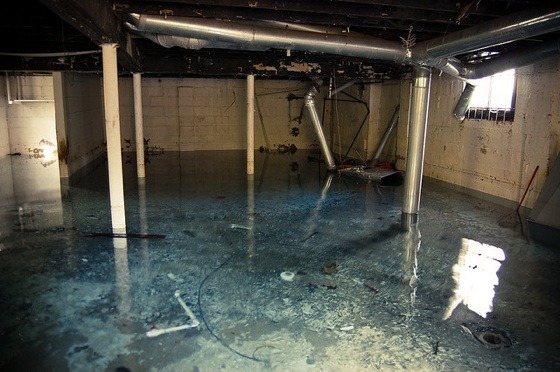
Why Professional Structural Drying Matters
After water extraction removes standing water, your home may look relatively normal—but significant moisture remains trapped within structural materials. Drywall, wood framing, subfloors, concrete, insulation, and other materials absorb water during flooding and release it slowly over time. Without proper drying, this hidden moisture causes ongoing problems:
Mold Development
Mold spores, present everywhere in our environment, need moisture to germinate and grow. Materials that remain damp for more than 48 hours create ideal conditions for mold colonization. Once established, mold spreads through building cavities, releasing spores that contaminate your entire home and create health hazards.
Structural Damage
Wood that remains wet swells, warps, and eventually rots. Drywall loses structural integrity and crumbles. Metal components corrode. Flooring delaminates or cups. These structural failures develop silently inside walls and under floors, often not becoming apparent until major repairs are needed.
Secondary Water Damage
Moisture trapped in one area migrates to adjacent materials. Wet wall cavities transfer moisture to surrounding framing, subfloors, and other components. What started as localized damage spreads through your home's structure.
Indoor Air Quality Problems
Damp environments support bacterial growth, dust mites, and other biological contaminants that affect air quality. Musty odors persist. Respiratory irritation continues. Your home never feels quite right.
Professional structural drying using industrial equipment and scientific monitoring prevents these problems.
We don't just point fans at wet areas and hope for the best—we calculate drying requirements, position equipment strategically, monitor progress daily, and verify complete drying before considering the job done.
The Science of Structural Drying
Effective structural drying requires understanding and controlling the psychrometric relationships between temperature, humidity, and evaporation. Our IICRC-certified technicians apply scientific principles to dry your home efficiently:
How Materials Dry
Building materials dry through evaporation—moisture moves from wet materials into surrounding air, then is removed by dehumidification. The rate of evaporation depends on several factors: air temperature, relative humidity, air movement across wet surfaces, and the material's own properties.
Creating Drying Conditions
We manipulate environmental conditions to accelerate drying while preventing secondary damage. This involves:
- **Temperature control**: Warmer air holds more moisture and increases evaporation rates. We maintain optimal temperatures for drying without causing heat damage. - **Humidity reduction**: Dehumidifiers remove moisture from the air, maintaining low humidity that drives continued evaporation from materials. - **Air movement**: High-velocity air movers direct airflow across wet surfaces, disrupting the boundary layer of humid air that slows evaporation.
Psychrometric Calculations
We use psychrometric charts and calculations to determine how much moisture the air can accept, how much dehumidification is needed, and whether conditions are optimal for drying. This isn't guesswork—it's applied science.
Material-Specific Considerations
Different materials dry at different rates and have different moisture thresholds. Hardwood flooring requires controlled drying to prevent warping. Concrete absorbs significant moisture and releases it slowly. Drywall dries relatively quickly but can be damaged by excessive heat. We adjust our approach based on the specific materials in your home.
Our Structural Drying Process
Galaxy Restoration follows IICRC S500 standards for all structural drying projects. Our systematic approach ensures complete drying without secondary damage:
Phase 1: Initial Assessment & Documentation
After water extraction, we conduct comprehensive moisture mapping using penetrating moisture meters and thermal imaging. We document moisture content in all affected materials, establishing baseline readings that guide our drying plan and track progress.
Phase 2: Drying Plan Development
Based on affected materials, moisture levels, and structure layout, we develop a drying plan specifying equipment types, quantities, and placement. We calculate required dehumidification capacity and air movement to achieve drying goals within appropriate timeframes.
Phase 3: Equipment Deployment
We position equipment strategically for maximum efficiency: -
Dehumidifiers
remove moisture from air, maintaining conditions that drive evaporation -
Air movers
direct high-velocity airflow across wet surfaces -
Specialty equipment
addresses specific situations (injectidry systems for wall cavities, floor mat systems for hardwood) -
Ducting and containment
focus drying energy where needed
Phase 4: Daily Monitoring & Adjustment
Every day during drying, our technicians return to monitor moisture levels and environmental conditions. We document readings, calculate evaporation rates, and adjust equipment placement as drying progresses. Some areas dry faster than others—we redistribute equipment to maintain efficiency.
Phase 5: Drying Verification
Before removing equipment, we verify that all materials have reached dry standard—moisture levels consistent with unaffected materials or industry standards. We document final readings, providing proof of complete drying for insurance and your records.
Phase 6: Equipment Removal & Preparation for Reconstruction
Once drying is verified, we remove equipment and prepare the space for reconstruction. Surfaces are ready for drywall installation, flooring, and finishing.
Professional Drying Equipment
Effective structural drying requires industrial-grade equipment that far exceeds what's available at consumer rental stores:
Low-Grain Refrigerant (LGR) Dehumidifiers
Our LGR dehumidifiers remove significantly more moisture than conventional units, achieving lower humidity levels essential for drying building materials. A single LGR unit can remove 15-30+ gallons of water per day, depending on conditions. We deploy multiple units sized to your home's drying requirements.
High-Velocity Air Movers
Professional air movers produce airflow many times greater than household fans. Properly positioned, they create evaporation conditions across wet surfaces while directing moist air toward dehumidifiers for extraction. We typically deploy 1-3 air movers per affected room.
Injectidry Systems
Wall cavities present special drying challenges—air can't reach inside enclosed wall spaces. Injectidry systems use hoses inserted through small holes to force dry air directly into wall cavities, drying framing and insulation that would otherwise remain wet.
Hardwood Floor Drying Systems
Hardwood floors require careful, controlled drying to prevent cupping, warping, and finish damage. Specialty mat systems create suction beneath flooring, pulling moisture through wood while controlling drying rate.
Desiccant Dehumidifiers
For challenging conditions or extremely low humidity requirements, desiccant dehumidifiers achieve humidity levels impossible for refrigerant units. We deploy these for specialized applications requiring exceptional dryness.
Monitoring Equipment
Penetrating moisture meters, non-invasive moisture meters, thermal imaging cameras, thermo-hygrometers, and data loggers ensure we track drying progress accurately and document conditions throughout the process.
Drying Timeline Expectations
How long structural drying takes depends on multiple factors. While we can't provide exact timeframes without assessing your specific situation, these general guidelines help set expectations:
Typical Drying Duration: 3-7 Days
Most water damage restoration projects require 3-5 days of structural drying. More severe water damage, challenging materials (like concrete), or complex structures may require 5-7 days or longer. We don't remove equipment until monitoring confirms complete drying—rushing this process leads to mold and other problems.
Factors Affecting Drying Time:
-
Water volume and duration
: More water and longer exposure = more saturation = longer drying -
Material types
: Concrete dries slowly; drywall dries faster; hardwood requires controlled drying -
Wall and floor construction
: Multiple layers, dense insulation, and enclosed cavities extend drying time -
Environmental conditions
: Existing humidity, temperature, and ventilation affect drying efficiency -
Equipment capacity
: Adequate equipment achieves faster, more complete drying
Why Rushing Causes Problems
We occasionally encounter pressure to remove equipment early—homeowners want their lives back to normal. We understand, but premature equipment removal before drying completes leads to mold growth, structural damage, and far greater disruption down the road. We verify drying with objective moisture readings, not just visual inspection or time elapsed.
Setting Realistic Expectations
During our initial assessment, we provide estimated drying timeframes based on your specific situation. We update you daily on progress and explain any factors that might extend drying duration. Transparency helps you plan while ensuring we don't compromise results.
Structural Drying Service Areas
Galaxy Restoration provides professional structural drying throughout Northern Virginia. Our teams arrive with the equipment and expertise to dry your home completely:
Fairfax County Structural Drying:
Fairfax City, Vienna, McLean, Great Falls, Falls Church, Tysons, Reston, Herndon, Chantilly, Centreville, Burke, Springfield, Annandale, Oakton, and all Fairfax communities. We understand the construction types common in Fairfax County and adapt our drying approaches accordingly.
Arlington County Structural Drying:
All Arlington neighborhoods including condos, rowhouses, and single-family homes. Multi-unit buildings require coordinated drying approaches we execute regularly.
Alexandria Structural Drying:
Old Town Alexandria and surrounding areas including Del Ray, Carlyle, Eisenhower, and Kingstowne. Historic construction presents unique drying challenges we understand and address effectively.
Loudoun County Structural Drying:
Ashburn, Leesburg, Sterling, and all Loudoun communities. We serve all of Northern Virginia with the same professional standards and equipment.
24/7 Water Damage Response
Structural drying is part of our complete water damage restoration service. When water damage occurs, call (703) 628-7600 for emergency response that includes extraction and professional drying—the complete solution your home needs.